
Making a DIY perfume at home is a very different challenge from simply buying a luxury perfume. For this project, I wanted to recreate the cool, watery feeling of Maison Margiela’s When the Rain Stops—a fragrance said to be inspired by a spring rain in Dublin in 1967. Instead of claiming an exact copy, I treated it as a hands-on perfume-making experiment: studying the note pyramid, estimating a formula, and building my own fresh aquatic scent with bergamot, juniper berries, freesia, guaiac wood, patchouli, and Ambroxan. This DIY perfume diary records the formula, blending process, three-week maturation, and final comparison with the original.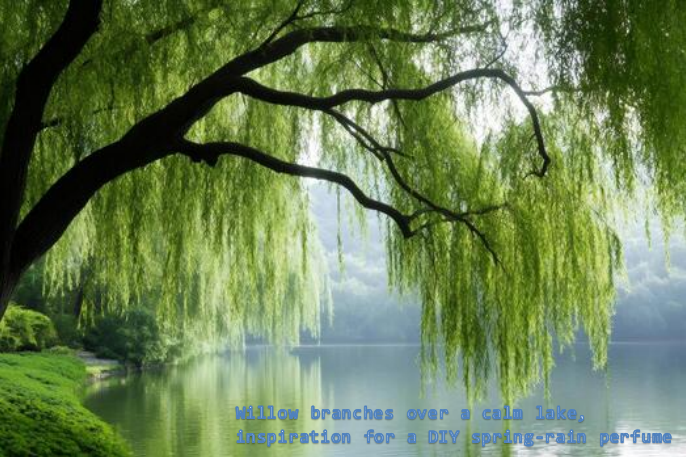
Before attempting a replica, I broke down the official note pyramid. Every layer has a clear job to do.
Top notes: post-rain ozone, juniper berries, bergamot
This layer is the fragrance’s hook. The ozonic note is its soul—the faintly ionized, chilly smell in the air after a downpour. Perfumers usually recreate it with aquatic, ozonic materials (such as Calone and watermelon ketone), and the dosage is notoriously hard to judge: too much smells like cheap laundry detergent, while too little fails to evoke rain. Juniper berries bring a gin-like, bitter green freshness that cools the watery accord; bergamot is the first ray of sunshine after the rain, lighting up the whole composition with bright citrus.
Middle notes: freesia, rose, mimosa
A clever combination. Instead of lush tuberose or sweet rose, the perfumer chose three translucent flowers: freesia is fresh with a hint of green stems, rose keeps only the softness of its petals, and mimosa adds a powdery, hazy greenness. Their only task is to make the floral notes feel diluted by rain—present to the nose, yet impossible to grasp.
Base notes: guaiac wood, patchouli, ambergris
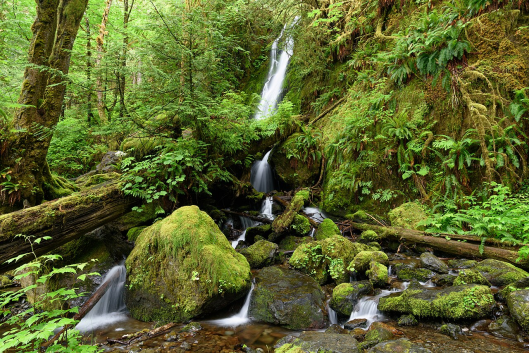
This is the “after the rain” phase. Guaiac wood smells like clean, faintly smoky dry timber—pine needles and a wooden bench dried halfway in the sun. Patchouli supplies the damp, earthy richness that grounds the composition. Ambergris (usually represented by Ambroxan-type materials) adds a warm, salty mineral quality and skin-like diffusion, so the scent seems to radiate from within the skin rather than sit on clothing.
The original formula in one sentence: Aquatic notes make the rain, transparent florals make the mist, and woods with patchouli make the earth.
I sprayed it once on my skin and once on a blotter, then carefully recorded the scene at each stage:

The original is an eau de toilette, so I estimate a fragrance-oil concentration of 12%–15%. Based on a structure in which the top notes provide sparkle, the heart stays sheer, and the base supports diffusion, here is my guess:
|
Note layer |
Material |
Estimated share |
|
Top notes (approx. 30%) |
Bergamot |
10% |
|
|
Ozone / aquatic accord |
8% |
|
|
Green-leaf accord |
6% |
|
|
Juniper berries |
4% |
|
|
Pink pepper (trace spice) |
2% |
|
Middle notes (approx. 25%) |
Freesia |
10% |
|
|
Rose |
6% |
|
|
Mimosa |
5% |
|
|
Jasmine grandiflorum (body and depth) |
4% |
|
Base notes (approx. 45%) |
Ambergris / Ambroxan |
15% |
|
|
White musk |
12% |
|
|
Guaiac wood |
8% |
|
|
Patchouli |
6% |
|
|
Moss accord |
4% |
A few reasons for these estimates: the base is the largest part because Ambroxan and musks carry most of the longevity. I capped the aquatic accord at an estimated 8% to keep it from smelling like laundry detergent; patchouli gets only 6% because the original’s earthiness is damp rather than bitter.
Tools: Pipettes, glass beakers, double-dealdehydized ethanol, blotter strips, dark glass bottles, a digital scale, and—most importantly—a notebook.
I added the materials drop by drop in the order base → heart → top, stirring and smelling after each addition. The base came together smoothly: as soon as the guaiac wood and Ambroxan mixed, a clean woody foundation emerged. When the freesia entered the beaker, it was as if clear water had been poured over the blend—the florals instantly turned transparent. When adding the top notes, I deliberately cut the aquatic materials to 6% to avoid a disaster.
Once blended, I diluted it to 15% fragrance oil : 85% alcohol, transferred it to a dark bottle, labeled it, and left it to mature for three weeks—three weeks that felt harder to endure than the blending itself.
The first spray after maturation was, honestly, a pleasant surprise.
The opening is distinctly green and citrusy, with a noticeable cooling effect. The watery “ionized” quality is a little harsher than the original, but for two or three seconds, I really could smell “rain that has just stopped.” Half an hour later, freesia and rose slowly drift up as the familiar, transparent floral heart. My rose is slightly better behaved than the original, though, missing that elusive powdery haze. Two hours in comes my favorite stage: woody musk clings to the skin, patchouli’s earthiness appears and disappears, and when I bring my wrist close, it really smells like bark dried halfway in the sun.
|
Dimension |
Original |
My replica |
|
Watery transparency |
Natural, like real air |
Slightly harsh; the aquatic accord has a faint synthetic edge |
|
Heart florals |
Wrapped in rain-mist; an elusive softness |
Clearer and more distinct, with less haze |
|
Base |
Dry wood and damp earth in excellent balance |
Slightly too much patchouli; half a shade darker overall |
|
Longevity |
About 4–5 hours, with gentle projection |
About 4 hours; close to the skin, with weaker projection |
|
Overall impression |
A perfect ten |
About 75–80% similar, by my own estimate |
The biggest gap is not whether any single material smells alike; it is that The original’s watery accord moves, while mine stands still.
I love perfume, and I also love the small act of defiance involved in blending it myself—no need to resemble anyone, no need to arrive anywhere, simply following the mood of the moment and letting a ribbon of scent fall and grow into weather of my own. Different scents bring different experiences and reflect different versions of me: sometimes overcast, like light behind the clouds hesitating to speak; sometimes muddy, like a road still wet long after the rain. They may not be bright, but they are real; they may not be perfect, but they all have an origin.
So this bottle does not need to be a stand-in for When the Rain Stops. When the rain ceases, it is half-dry bark; when the sky darkens, it is the watery haze still lingering in my mind. Spray it on, and it feels like pressing my mood gently onto my wrist—clear skies are me, rain is me, and mud is me too. All of it is me. All of it is myself.
Enjoy this DIY perfume experiment? Explore our luxury perfume collection, or browse more scents in our fragrance store.
DIY perfume collection → https://zivabea.com/collections/diy-perfumehigh-concentrated-fragrance
fragrance store → https://zivabea.com


