
— A replication diary of Amouage Guidance
Welcome back to my little DIY perfume corner ✧ The day I got my bottle of Amouage Guidance, I spent the whole afternoon smelling my own wrist. This 2023 release by Quentin Bisch — a FiFi Award winner and arguably the peak of “milky-sensual” perfumery — completely overturns Amouage’s usual “keep your distance” grandeur. It is luxury perfume at its most disarming: a well-born young heiress wrapped in a cashmere shawl, noble yet irresistibly approachable, the kind of bottle that anchors the niche shelf behind the glass at any high-end fragrance store. So I did something presumptuous: I decided to recreate it at home. This blog post is my complete DIY perfume diary of that experiment.

Sultan Qaboos Grand Mosque, Muscat, Oman — birthplace of “the king’s gift”
Before recreating anything, you have to know your “opponent” inside out. The official note structure is a classic three-act pyramid — but every act hides a trick.
Top Notes | Pear, Frankincense, Hazelnut
Pear: not a crisp green pear, but a ripe, juice-swollen conference pear — sweet in a very well-mannered way. Quentin Bisch is brilliant at using pear for “youthfulness”; it is the first building block of this fragrance’s “rich heiress” persona.
Frankincense: Amouage’s DNA. Most houses use frankincense for “temple vibes,” but here it contributes only a cool, resinous chill — like a draft of cold air over the sweet pear, keeping the opening from turning cloying.
Hazelnut: the real stroke of genius. The roasted, fatty aroma of nuts is the advance guard of the “milky” character. From the very first second, this fragrance’s sweetness is not candy sweetness — it is the sweetness of a pâtisserie.
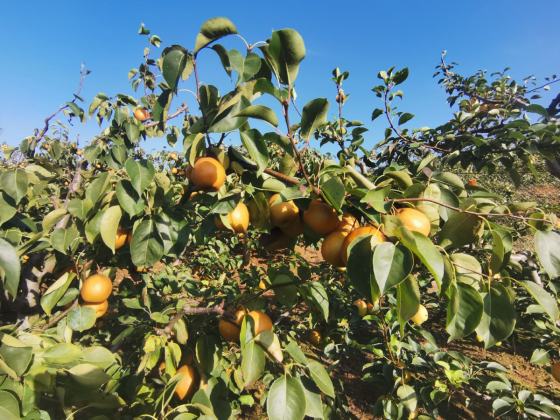
The top-note tableau: a sunlit pear orchard — juicy, fresh, and never cloying
Heart Notes | Saffron, Rose, Jasmine, Osmanthus
Saffron: a slightly bitter, faintly leathery, medicinal crimson spice. It is the “skeleton” of the whole composition — without it, the florals would collapse into cheap syrup. But the dosage must be surgical; a drop too many and you are in an apothecary.
Rose: not the grand Bulgarian kind, but a softened, skin-close rose — responsible for the “sensual.”
Jasmine: contributes a voluptuous white-floral body, adding the roundness of old money.
Osmanthus: with its natural apricot-and-leather facets, osmanthus is the Eastern finishing touch. It echoes the pear, carrying the fruitiness seamlessly from the top notes into the heart.
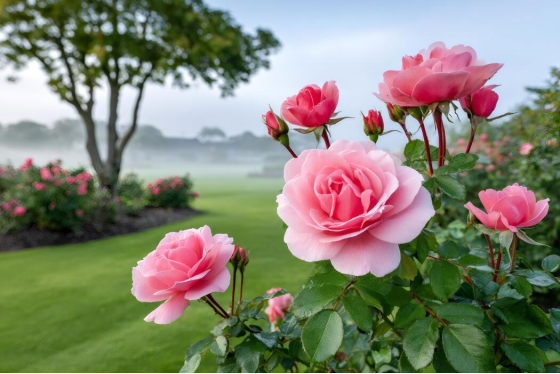
The heart-note tableau: a mist-shrouded garden, with saffron stitching the florals together like a fine red thread
Base Notes | Sandalwood, Vanilla, Ambergris
Sandalwood: the soul of the fragrance. Almost certainly a Mysore-style profile or Australian sandalwood bolstered by lactonic molecules (sandalwood alcohols, creamy synthetic sandalwood materials) — silk-and-cream sandalwood, not dry temple wood.
Vanilla: the other half of the milky sweetness. Fused with sandalwood, it produces the texture of “a cashmere blanket fresh out of the dryer.”
Ambergris (Ambroxan-family materials): a skin-hugging, salty-warm animalic touch, applied with restraint — the secret weapon behind both the longevity and the “second skin” effect.
Verdict: this fragrance wins not on rare ingredients but on the art of proportion. Pear and osmanthus deliver “sweet but not cloying”; saffron delivers “seductive but not vulgar”; sandalwood and vanilla deliver “milky but not juvenile.” All three lines are indispensable.
Before touching a single dropper, I sprayed the original on a blotter one more time and walked through it with my eyes closed:
0–15 minutes: an ice-cold conference pear sliced open in an air-conditioned room, a single restrained stick of frankincense burning nearby, a faint toasted aroma of crushed hazelnuts in the air. The smell of an “exquisite breakfast.”
15 minutes–2 hours: the pear steps back and the garden gates open. Rose and jasmine arrive veiled in thin mist; saffron runs through them like a fine red thread, stitching the florals together. The occasional flicker of osmanthus made me half-believe I was walking along an autumn causeway lined with sweet olive trees. (。♥‿♥。)
After 2 hours: everyone else has left the stage; only a cashmere blanket remains, wrapped around the body. Sandalwood and vanilla sit at body temperature, and the ambergris makes it smell not like “perfume” but like “this person simply smells wonderful.”
That is my replication target: it is not a perfume — it is a state of being.
Taking the perfume oil phase at 10% concentration as the baseline, my bet on the structure looks like this:
|
Tier |
Likely Materials |
Est. Share |
|
Top |
Pear esters (pear aldehyde / isoamyl acetate accord), frankincense oil, hazelnut lactone / hazelnut flavor base |
15%–20% |
|
Heart |
Rose otto + rose ethers, jasmine absolute / jasmine esters, osmanthus absolute (sparingly), saffron (traces) |
30%–35% |
|
Base |
Sandalwood synthetics (e.g., Sandalore), natural sandalwood oil, vanilla / vanillin, Ambroxan |
45%–55% |
A few key intuitions:
Materials: aroma chemicals plus a few naturals (all handled as 10% dilutions), perfumer’s alcohol, droppers, a small scale, and several 5 ml glass vials. Version One, 5 ml of perfume oil total:
|
Material |
Amount (approx.) |
Role |
|
Sandalore (10%) |
1.8 ml |
Creamy sandalwood backbone |
|
Australian sandalwood oil, natural |
0.4 ml |
Depth and body |
|
Vanillin (10% dilution) |
0.6 ml |
Milky sweetness |
|
Ambroxan (10%) |
0.5 ml |
Skin-close warmth, longevity |
|
Rose ether + rose otto |
0.5 ml |
Heart-note rose |
|
Jasmine absolute (10%) |
0.3 ml |
White-floral voluptuousness |
|
Osmanthus absolute (1% dilution) |
0.1 ml |
Eastern fruity accent |
|
Saffron oil (1% dilution) |
2 drops |
Medicinal backbone |
|
Pear ester accord (isoamyl acetate + cis-3-hexenyl esters) |
0.4 ml |
Juicy pear opening |
|
Frankincense oil (10%) |
0.2 ml |
Cool resinous chill |
|
Hazelnut lactone / furanone (traces) |
0.2 ml |
Roasted-nut creaminess |
|
Gamma-undecalactone (1% dilution) |
2 drops |
“Skin-like” milky effect |
Sealed, shielded from light, and left to macerate for 14 days — the golden rule of DIY perfume is that you never smell the blend right after mixing; the molecules need time to “shake hands.”
Two weeks later, I uncapped the vial and sprayed it on the inside of my wrist:
Opening: the pear was there, about seventy percent of the original’s juiciness; but I had underdosed the frankincense, so that “cool restraint” was missing and my opening ran a notch sweeter than the original. (T_T)
Heart: the rose–jasmine roundness matched my expectations, but the osmanthus turned out shockingly attention-seeking — I thought 0.1 ml was restrained, yet it nearly drowned out the jasmine mid-development. The two drops of saffron were exactly right; that little bit of bitterness held the entire heart upright.
Drydown: the part I am happiest with. The Sandalore + Ambroxan combination genuinely produced that “cashmere blanket” feeling. I sprayed it before bed, and the next morning there was still a milky-sandalwood whisper on my cuff.
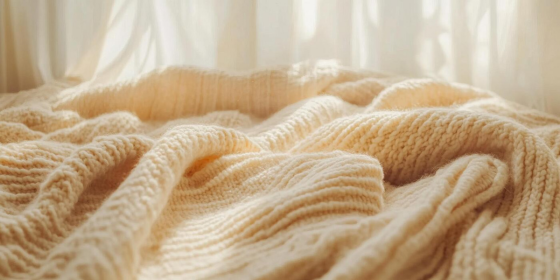
The drydown tableau: a freshly dried cashmere blanket in an air-conditioned room — safe, soft, healing
Honestly, three gaps remain versus the bottle behind the glass at the fragrance store:
Directions for improvement (a note to Version Two):
Recreating a fragrance called “Guidance” is, in the end, an attempt to recreate a kind of composure.
This perfume’s character is “the relaxed ease of a stable inner core” — it is in no hurry to prove anything. The sweetness of pear, the bitterness of saffron, the warmth of sandalwood each step on stage in their own time, and none of them upstages another. DIY perfume works the same way: you worry that a little less osmanthus will not be enough, then half a drop too many steals the whole show; you assume the base notes are merely a finishing touch, then discover they hold half the kingdom and decide what your clothes will smell like three days later.
In a perfume, the true sovereign is never the loudest ingredient — it is the one that knows best when to exit.
There is also a lesson about negative space. The original’s sacred halo is precisely the atmosphere conjured by countless trace materials, each receding just below the threshold of perception. Life works the same way — true refinement is not accumulated; it is subtracted.
I will probably never reproduce one hundred percent of Guidance, just as no cover version is ever the original recording. But through round after round of weighing, titrating, and waiting for maceration, I have moved a little closer to that state of being “gentle yet certain.” And that is the one thing no fragrance store will ever stock: a bottle that was quietly reformulating its maker while it macerated.
Perhaps that is the point of this hobby: while you are recreating a perfume, the perfume is quietly reformulating you. ヾ(≧▽≦*)o

Epilogue: sunset over the Wahiba Sands, Oman — the homeland of frankincense, gentle yet certain
Note: This article documents a personal hobby experiment. The recreation is for private enjoyment and study only and has no commercial purpose. Quick DIY perfume safety note: always use essential oils and aroma chemicals within IFRA safety limits, buy from reputable suppliers, and patch-test first if you have sensitive skin.
Explore more green, aquatic and woody scents in our fragrance store → https://zivabea.com/collections/diy-perfumehigh-concentrated-fragrance


